


← Back to South Florida Fish ID
Blood Ark
Lunarca ovalis · Arcidae
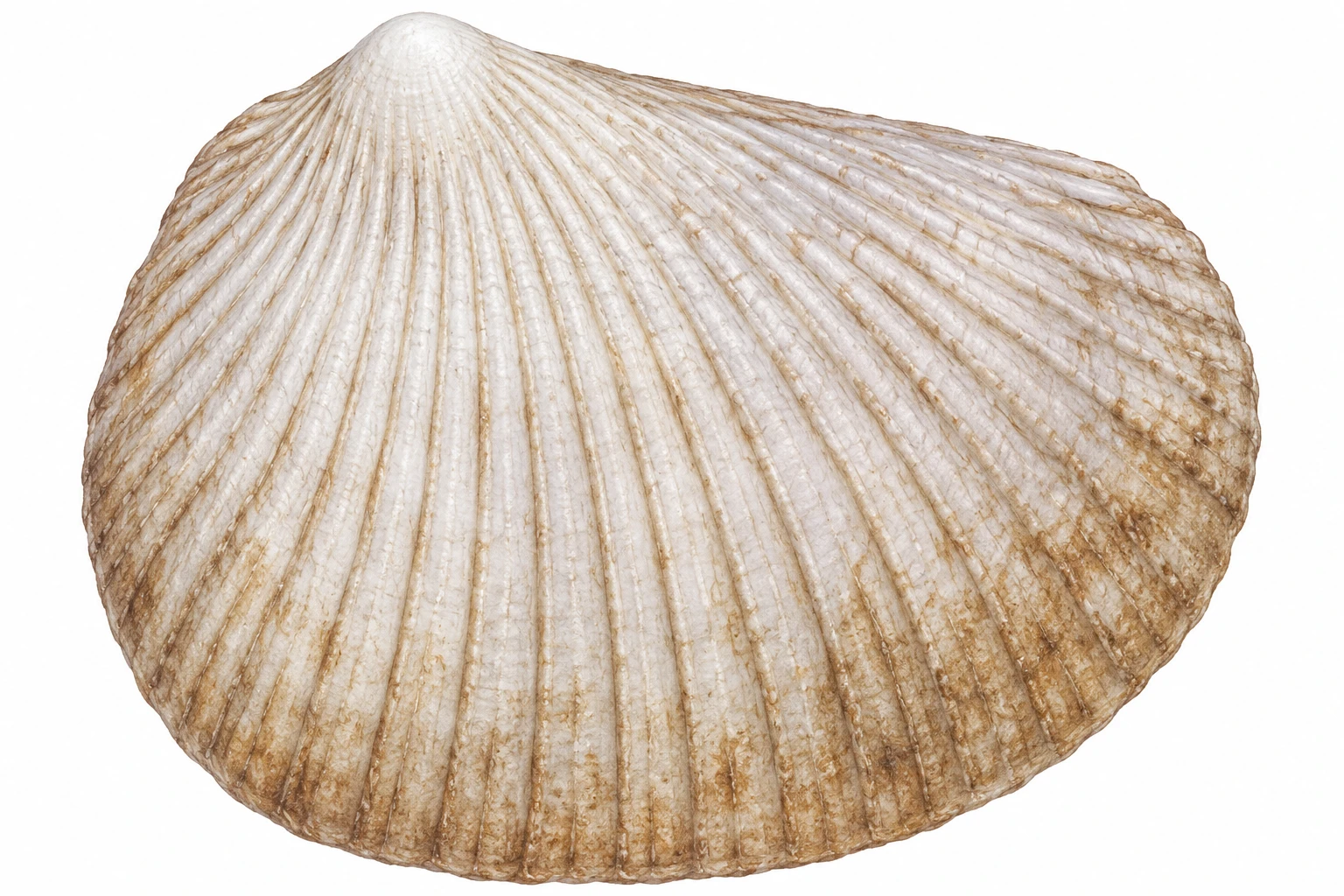
Look for a thick, rounded shell with strong radial ribs, often partly covered by a dark outer coat. The outline can vary, so compare the ribs and hinge together.
One fun thing to know
Hemoglobin gives blood arks their name. Look for shell clues in the field rather than opening a live animal.
I saw this and want to share
To share this guide with a dive buddy, copy the page link.
How to identify it
- Thick, inflated shell, generally oval
- Strong radial ribs with a brown coating that may cling between ribs
- Pale interior on a shell that is already empty; outline can vary
Where to look
The Smithsonian lists it as native in the Florida Straits and middle eastern Florida; it is also listed for the Hobe Sound refuge.
Size
Can reach roughly 3 in (75 mm); smaller shells are common.
What it eats
A suspension feeder that filters particles from water moving across the gills.
Behavior
An animal of soft bottoms, often partly concealed in sand or mud.
Reproduction
Marine bivalves commonly develop through free-swimming larvae before settling; Florida spawning dates for this species were not verified.
Look-alikes
The ponderous ark is heavier-looking and can have a more angular outline; turkey wing is much longer with wavy bands. An isolated worn valve is not always enough for a confident ID.
Can you collect or eat it?
Observe and leave in place. Check the Florida Fish and Wildlife Conservation Commission’s shell-collecting rules and local protected-area restrictions before removing a live shell.
Check current species and site rules before collecting. This guide does not establish permission to collect.
Make your next dive happen
Dive with Stuart Scuba · Train with us · Travel with us · Shop with us



