


What Gas Should Be in a Scuba Pony Bottle? The “Oh S#$T” Bottle Explained
Benjamin Hadfield Nov 20, 2026
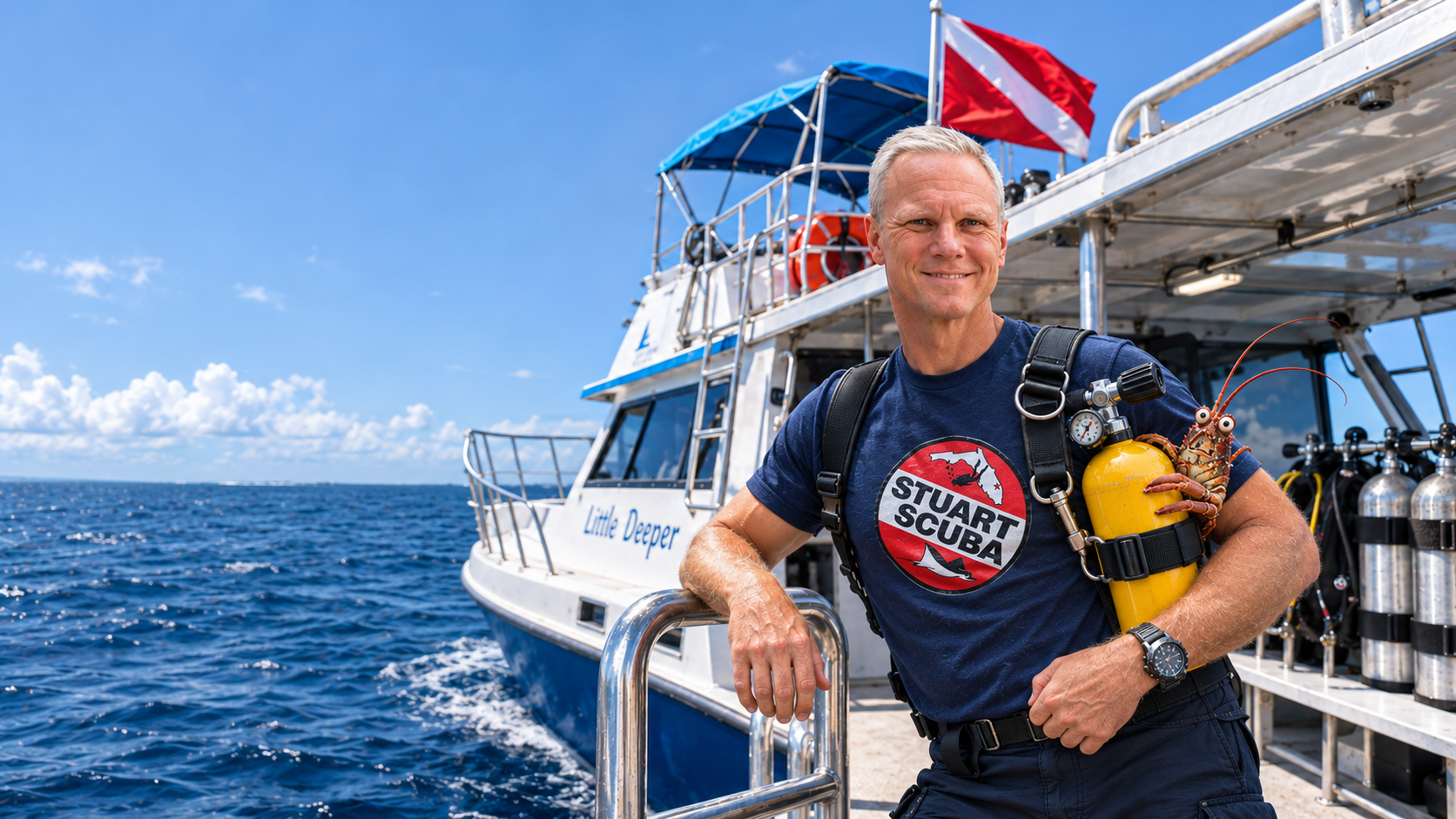
AKA your “Oh S#$T” bottle
Your pony bottle can be full, beautifully rigged, and completely useless if it is out of reach or contains a mix you cannot breathe at the depth where you need it. When your primary gas supply fails, that is a lousy moment to discover either problem.
A pony bottle has one job: provide an independent gas supply for a controlled exit after a problem with your primary supply. It is not a dive extender. It does not give you permission to stay longer, go farther, or spend your reserve gas chasing one more lobster.
There is a lot of certainty online about air versus Nitrox in a pony. Here is my position: if I am diving Nitrox, I want Nitrox in the pony too, selected for the deepest point where I might need to breathe it. On a suitable profile, that may be EAN40. It is a preference built around my plan and training, not a universal gas recipe for every dive.
MYTH 1: “Air is good at any depth.” Wrong. Air has uses, but no breathing gas is automatically right for every depth and dive. Depth, oxygen partial pressure, nitrogen narcosis, gas density, exposure time, training, and the exit plan all matter. Nitrox has depth limits too; more oxygen means its MOD arrives sooner. If you are new to Nitrox, start with our Enriched Air Nitrox course.
TRUE 1: A redundant gas supply is for emergencies. SDI Solo Diver training includes an independent gas source, and TDI/SDI guidance says not to count redundant gas as part of the planned dive budget. The pony is there to help you get out when the primary supply has a problem. It does not become extra bottom time just because you carried it.
Manage your back gas first
A pony does not replace sound primary-gas planning. You still need enough back gas to complete the planned dive, return to your exit point, make a controlled ascent, and make the stops your plan calls for.
For the recreational open-water dives I have in mind, I generally want to see at least 1,000 psi in the back gas when the diver leaves the bottom. That is my working minimum for those dives, not a universal number for every diver, cylinder, depth, current, or ascent. If the plan calls for more, then 1,000 psi is not enough. Plan the gas for the actual dive.
At the surface, you may hear “come back with 500 psi” or “come back with 50 bar.” They are not equal. 500 psi is about 34.5 bar; 50 bar is about 725 psi. Follow the operator’s stated return requirement, but do not mistake it for your whole gas plan. We have seen analog and digital SPGs differ by as much as 400 psi. That is a reason to leave margin, not a reason to plan closer to empty.
MYTH 2: “Nitrox gives me longer dives and makes them safer automatically.” Nitrox gives you a choice. On the same depth-and-time profile, its lower nitrogen fraction can reduce nitrogen exposure. Or you can plan to use the additional no-decompression time allowed by the correct Nitrox tables or computer setting. You do not get the full benefit of both choices automatically on every dive. Nitrox does not change how much gas is in your cylinder or how quickly you breathe it. PADI describes the same two ways to use Nitrox: extend no-stop time, or stay within air limits and use less nitrogen exposure as added conservatism.
MYTH 3: “The pony is a little tank I can use to extend the dive.” No. Treat it as reserved emergency gas. If the dive plan only works because you expect to breathe from the pony during normal diving, the plan needs more primary gas.
Three ways to mount a pony bottle
There are several ways to carry a pony. These are the three I see most often. The important part is that the bottle stays secure and streamlined, while you can reach the valve, gauge, and regulator when you need them.
| Mounting option | Pros | Cons |
|---|---|---|
| 1. Piggyback on the primary cylinder | Compact, familiar, and tucked away. The bottle is less likely to drag against the bottom or surrounding structure. | The valve and SPG can be hard to see or reach. Opening or closing the valve yourself and handing the bottle to a buddy can be awkward. A leak may be harder to notice. This is my least favorite setup. |
| 2. Mounted behind you on the backplate or harness | Can be secure and integrated with the diver’s equipment without a bracket clamped directly to the primary cylinder. | It is still behind you. Depending on placement, the valve, gauge, and regulator can be difficult to see, reach, or pass to a buddy. I am still not a fan. |
| 3. Slung under the left arm, stage-style | The valve and gauge are easier to see and reach, and the bottle can be handed off. It can be rigged close and parallel to your body. This is my preference. | It takes careful rigging and practice. If it hangs loose or sticks out, it can snag, bang into things, or affect trim and movement. |
TDI/SDI discusses the tradeoff between a tidy back-mounted bottle and access to its valve. DAN describes a slung bottle clipped at the chest and hip, with a bungee holding it close under the armpit. “Tight” should mean secure and parallel to your body—not buried where you cannot reach or deploy it. If you like the equipment configuration, take a look at our Sidemount Diver course and our article on sidemount diving and gear access.
MYTH 4: “A 19-cubic-foot pony will always be enough.” The number stamped on the cylinder does not answer that. Gas needed for an exit depends on depth, breathing rate, stress, ascent time, and required stops. A small bottle that might work on a shallow dive may not support a controlled ascent from a deeper one. DAN notes that bailout duration depends on breathing rate and depth; at 100 feet, a small bottle’s supply may last a fraction of its surface duration. Plan for the dive you are actually doing, and practice with the setup.
Should the pony gas match your back gas?
My rule is simple: when I am diving Nitrox, I want Nitrox in the pony too. I do not deliberately choose an air pony as the routine pairing if an appropriate Nitrox blend is available. The same mix is straightforward when it is safe for the deepest point where I may need it. A richer mix may also fit—but only if its MOD fits the bailout plan.
MYTH 5: “If I use air from a pony on a Nitrox dive, I am guaranteed to get decompression sickness.” That overstates the evidence. DAN says the theoretical concern is that air has a higher nitrogen fraction, which could increase inert-gas uptake. But DAN also says the bailout ascent should immediately follow the switch, making time on that gas short; its answer describes the practical added risk as very small compared with the value of having usable bailout gas. DAN calls EAN in both systems the ideal choice. My position is to plan the pony with Nitrox when the dive permits it, while being honest that a brief air bailout does not guarantee DCS. In a real gas emergency, use the breathable supply you have and begin the planned exit.
TRUE 2: If the same Nitrox mix is safe for the planned depth, using it in both systems is the cleanest match. It avoids deliberately adding a higher-nitrogen gas to the bailout. That does not mean the exact same blend is mandatory in every configuration. The MOD and the complete bailout plan still control the choice.
Read DAN’s answer about air versus Nitrox in a pony bottle. It makes the distinction that often gets lost in online arguments: ideal gas matching is one thing; claiming that any short air bailout guarantees DCS is another.
Nitrogen load, off-gassing, and Henry’s law
At depth, pressure raises the partial pressure of the nitrogen in the breathing mix. Over time, nitrogen moves from the lungs into the blood and tissues. Henry’s law helps explain the relationship between a gas’s partial pressure and how much can dissolve in a liquid. Real divers also have different tissues, circulation rates, workloads, and exposure times, so it is not a one-line calculator for decompression.
During ascent, the surrounding pressure falls. The gradient changes, and inert gas moves from the tissues into the blood and then into the lungs, where it is exhaled. That is off-gassing. DAN describes that movement from tissue to blood to lungs, including during ascent and stops.
TRUE 3: Nitrox can reduce nitrogen exposure on the same profile. It can also be used to extend no-stop time when the diver plans for that purpose and stays inside the mix’s limits. Those are choices in the plan, not a free safety bonus.
MYTH 6: “If stress makes my heart race, I will off-gas nitrogen faster.” A faster heart rate is not a nitrogen purge button. Henry’s law is about gas pressure and dissolution; circulation affects how gases are transported, but stress does not make nitrogen vanish. Physical workload during the descent and bottom phase can increase inert-gas uptake and later decompression stress. Exertion can also raise carbon dioxide, which can lower the threshold for oxygen toxicity. DAN discusses workload, circulation, carbon dioxide, and decompression stress. If you are stressed, breathe, stabilize, communicate, and follow the emergency plan. Do not count on your heart rate to fix the gas plan.
The 40% argument—and my 1.6 PPO₂ planning floor
Here is my practice: I use a pony mix selected around a 1.6 ATA PPO₂ planning floor at the deepest point where I might need that gas. I start the gas-selection calculation at the deepest bailout point, then check the mix’s MOD and the entire exit plan. On a suitable profile, that may be EAN40. I like the richer gas because it can give me an off-gassing advantage as I ascend. If I can gain an accelerated-decompression benefit during a controlled bailout ascent, I am happy to take it.
That is my technical planning choice, not a universal recommendation for every Nitrox diver. DAN describes PPO₂ at or below 1.4 ATA as the green-light region for open-circuit scuba. It places 1.4 to 1.6 in a narrow-margin yellow-light region and says 1.5 to 1.6 should be limited to specific planned conditions such as decompression while the diver is at rest. An emergency may involve exertion, an unexpected depth change, or elevated carbon dioxide. That is why training, a written plan, and the gas’s actual MOD matter.
For EAN40, the calculated MOD is about 99 feet at 1.6 ATA and about 82 feet at 1.4 ATA. Those are calculated planning values, not depths to push to. If the dive is deeper than the pony’s MOD, EAN40 is not appropriate as the gas you may have to breathe at that deeper bailout point. Choose a mix that is appropriate where it may be used, or build a specific, trained gas-switch plan. Do not discover the MOD during the emergency.
MYTH 7: “EAN40 at 1.6 means 40% is safe at any depth.” Absolutely not. Oxygen partial pressure rises with depth. A mix that fits one bailout depth can be unsafe at another.
TRUE 4: More oxygen in the mix means a shallower operating depth. At the same depth, a higher oxygen fraction creates a higher PPO₂. That is why EAN40 reaches its MOD sooner than EAN32 or air. DAN’s oxygen-toxicity guidance lays out the 1.4, 1.6, and MOD ranges.
MYTH 8: “The richer the gas, the faster and safer the ascent at every depth.” A richer gas can support accelerated decompression in the part of the ascent where that gas is appropriate and planned. It does not make the gas safe below its MOD, erase oxygen exposure, or remove the need to follow the ascent schedule. There is a real advantage to reducing the inspired inert-gas fraction during a planned decompression phase. There is also a real hazard in breathing too much oxygen at too great a depth.
TRUE 5: Oxygen-rich gas can improve off-gassing during planned decompression. That can be useful in an emergency ascent when the gas is appropriate for the depth and the plan. It does not turn a pony bottle into a staged-decompression system by itself. A pony’s primary job is bailout. A planned deco bottle and a pony bottle are not automatically interchangeable.
For more on PPO₂ planning, see my article on 1.4 as a working limit and 1.6 in planned decompression.
If you have to use the pony, the dive is over
Switch to the redundant supply using the procedure you practiced, stabilize, signal your buddy or team, and begin the planned exit. Do not keep exploring because “we’re already here.” The turtle will still be there on another dive.
MYTH 9: “Once I’m on the pony, I should go straight to the surface and forget the stops.” The emergency does not erase a decompression obligation. The goal is a controlled ascent that follows the dive plan and your training. On a no-stop dive, that means following the planned ascent and safety-stop procedure when conditions and gas allow. On a staged-decompression dive, follow the decompression plan and its contingency procedure. A safety stop and mandatory staged decompression are not interchangeable. If the pony does not hold enough gas for the planned exit and required stops, the configuration is not adequate for that dive.
Use of the pony is a bailout, not a reason to continue the dive. You do not have to rush uncontrolled; you do have to end normal diving and start the exit. Keep the team informed and follow the plan you actually trained.
MYTH 10: “My octopus is the same thing as a pony bottle.” An alternate second stage is useful for sharing gas, but it draws from the same cylinder as your primary regulator. If that cylinder is empty, the octopus is empty too. A pony has a separate cylinder and regulator. Those systems solve different problems.
Want to understand gas selection, oxygen exposure, and decompression planning in practice? Start with the training that fits your experience. Review the Solo Diver course for independent-diving skills, or—if you meet the prerequisites—our Advanced Nitrox and Decompression Procedures course.
Prepare for the dive twice: at the dock and on the boat
A pony bottle should get checked at the dock and again on the boat. The dock check gives you time to find and fix a problem. The boat check confirms you brought the right bottle, with the right gas and pressure, for the dive you are about to make.
At the dock or fill station
- Analyze the gas yourself. Confirm the oxygen percentage, label the cylinder with the mix and MOD, and set your computer for the gas you will breathe.
- Check cylinder pressure, valve, O-ring, regulator, hoses, SPG, and second stage. Look for damage, leaks, and unusual wear.
- Pressurize the regulator. Confirm the SPG works, listen for leaks, and breathe from the second stage. It should work normally.
- Fit the bottle and route the hoses. Wearing your full kit and gloves, confirm that you can reach the valve, gauge, and regulator without changing your position in a way you have not practiced.
TDI’s Nitrox standards require gas analysis, labeling, and MOD planning. Its regulator-check guidance also recommends checking equipment under pressure and breathing from the second stage before a dive.
On the boat, before you gear up
- Recheck bottle pressure and confirm the label matches the dive plan and the analyzed gas.
- Inspect clips, straps, bungee, and hose routing. Nothing should dangle, fall free, or snag.
- Check that the valve is reachable and the second stage is secured where you can deploy it quickly.
- Tell your buddy how the pony is rigged, which gas is in it, and whether its valve is open or closed. The buddy should not have to guess.
For my slung-bottle setup, my preference is to charge the regulator, check the gas and pressure, confirm that it breathes properly, then close the valve before the dive while leaving the regulator pressurized. The idea is to reduce the chance of losing the cylinder’s gas if the second stage free-flows or gets damaged. TDI’s discussion notes that some divers use a closed valve and others leave it open; it describes this as a preference, not a universal rule. Whichever procedure you use, train it and brief your buddy.
MYTH 11: “If the pony valve is closed, I can grab the regulator and breathe indefinitely.” No. A pressurized regulator line may provide only a few breaths before you need to open the cylinder valve. If a closed valve is your procedure, opening it is part of deploying the pony. Practice the whole sequence with your gloves and actual setup. Make sure your buddy knows it too.
TDI’s discussion of redundant gas explains the closed-valve preference and the need to practice access. Some divers choose to dive with the valve open. What matters is that the diver and team know the procedure, can execute it, and have built it into the plan.
Training and practice matter more than the bottle
A redundant regulator clipped to a cylinder is not a complete emergency plan. You need to know what gas you have, the depth where it can be used, how to reach it, how its valve works, how long it can support the planned exit, and what your buddy should do. Practice deploying it in the water with the same mount, gloves, and exposure protection you will use on the dive. Comfort comes from repetition, not from admiring the shiny extra tank on the bench.
MYTH 12: “Taking a solo course means I can dive alone anywhere.” No. Independent-diving training is about self-reliance, gas management, and handling emergencies. It does not make every environment or every profile appropriate. The SSI Independent Diving standard, for example, requires specific experience and redundant gas, and says graduates remain within environments and depth limits equivalent to their training. A solo certification is not cave, overhead, or staged-decompression training.
I strongly encourage qualified Divemasters and instructors to take an independent or solo course, even if they do not plan to dive alone. We spend time diving with students and divers who may be less experienced. We should be able to manage our own gas, equipment, navigation, and exit when a problem happens to us. Nikki says the Solo Diver course is the best course she has ever taken. I think every DM and instructor should take it.
For divers whose experience and prerequisites fit, I also encourage Advanced Nitrox and Decompression Procedures. Those courses teach the planning behind richer mixes, oxygen exposure, gas switches, and staged decompression. They explain why “more oxygen” can help in one part of an ascent and become a hazard in another. They are technical courses with defined prerequisites and limits, not a shortcut for extending a recreational dive.
For a broader conversation about buddy proximity, gas planning, and what to do when the plan changes, read Team Diving Beats the “Buddy System” When the Buddy System Gets Vague. You can also use our Scuba Course Finder to see available training, or contact Stuart Scuba to discuss the right next course for your experience.
Pony-bottle checklist
- Primary gas plan works without the pony.
- Pony gas is analyzed, labeled, and appropriate for the deepest bailout point.
- MOD and computer settings match the analyzed mix.
- The cylinder, valve, regulator, gauge, hoses, and mount are checked at the dock and on the boat.
- You and your buddy know how the valve is configured and how to deploy the gas.
- If you switch to the pony, terminate the dive and follow the planned exit and stops.
Explore Solo Diver, Advanced Nitrox and Decompression Procedures, and other Stuart Scuba classes.



