


← Back to South Florida Fish ID
Bleeding Tooth Nerite
Nerita peloronta · Neritidae
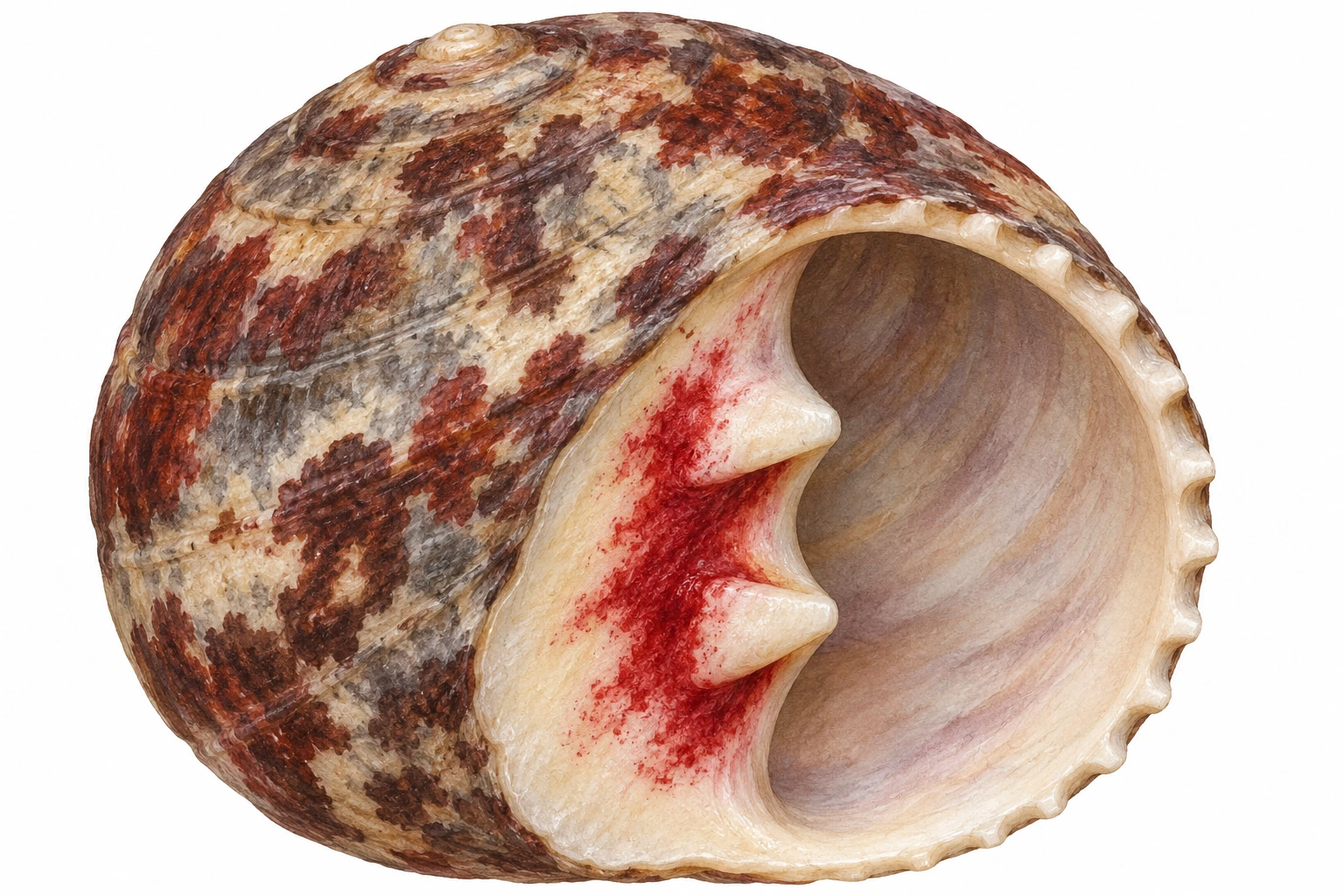
Look for a thick, rounded shell tightly fitted against rock in the splash zone. The most distinctive mark is next to the mouth of the shell, not on the back.
One fun thing to know
Its name comes from red shell pigment around a toothlike projection; it is not blood.
I saw this and want to share
To share this guide with a dive buddy, copy the page link.
How to identify it
- Broad, low dome with a stout outer lip
- Rounded spiral ribs run across a cream, olive or mottled shell
- One or more dark reddish patches near the white, toothed opening
Where to look
Photographed on rocky shoreline in Martin County and in the Florida Keys. Search suitable intertidal rock, not deep reef.
Size
Up to 4 cm (1.6 in) in the FAO identification account.
What it eats
Grazes algae and films on hard surfaces.
Behavior
Shelters in cracks during the day and searches for food at night; it may return to a favored shelter.
Reproduction
Nerites lay small capsules on firm surfaces; a local laying season is not well established.
Look-alikes
Four-tooth nerite can be red on the back, but the blood-red patch at the opening is the better separation. Checkered nerite usually shows small black and pale blocks.
Can you collect or eat it?
Observation profile, not a harvest or edibility recommendation. Leave living animals and occupied shells in place; follow site rules.
Check current species and site rules before collecting. This guide does not establish permission to collect.
Make your next dive happen
Dive with Stuart Scuba · Train with us · Travel with us · Shop with us



