


Fish identification archive / Raja Ampat
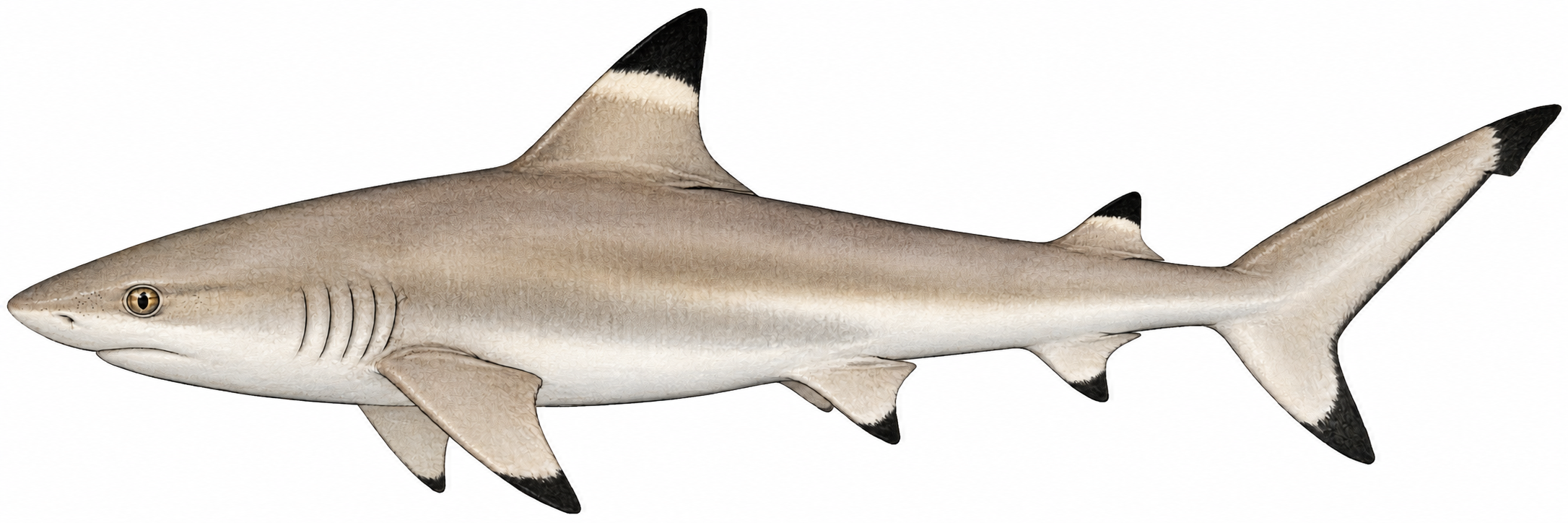
Blacktip Reef Shark
Carcharhinus melanopterus
Raja Ampat field guide
Six things worth knowing
- Waigeo is the type locality associated with its original scientific description, giving this shark a special Raja Ampat connection.
- The shallows matter. Blacktip reef sharks use lagoons and reef flats, and some populations have nurseries in very shallow coastal water.
- Pups, not egg cases. Mothers give birth to live young. Litters of two to four are common, although the numbers vary by population.
- Nursery loyalty isn’t absolute. A study at Moorea found that some mothers came back to the same nursery to give birth, while others changed sites between seasons.
- An occasional snake on the menu. Fish, crustaceans, and squid are usual prey. Researchers have also reported sea snakes in the diet.
- Dark on top, light beneath. A tan-to-brown back and pale underside help the shark blend against different backgrounds when viewed from above or below.
How to identify it
Look for a conspicuous black cap on the first dorsal fin, accented by a pale border. The back is tan to brownish, the belly pale, and the snout short and rounded.
Habitat and where to look
Shallow coral reefs, reef flats and sand flats; it also uses reef edges and tidal mangrove habitats.
Daily habits and behavior
Many studied populations show strong attachment to relatively small home areas. A passing shark may therefore be travelling through familiar territory rather than wandering at random.
What is on the menu?
Small fishes, crustaceans and molluscs, including cephalopods.
Mating and the next generation
Live-bearing. Developing pups receive nourishment through a yolk-sac placenta; most reported litters contain two to four pups, with reproductive timing varying geographically.
Look-alikes and identification traps
Grey reef sharks lack the bold black cap on the first dorsal fin and instead have a broad black rear margin on the tail. Do not confuse this species with the separate blacktip shark, Carcharhinus limbatus.
Try this observation
Compare the dorsal cap and tail as it passes. Leave its route open and do not corner sharks in shallow water.
Raja Ampat occurrence
Recorded in Raja Ampat; a regional record is not a promise of a sighting on a particular dive. This guide does not imply that every site, itinerary or season offers the same chance of an encounter.
Observe, do not disturb
Keep a respectful distance, leave the animal an unobstructed route and follow your dive guide. Do not touch, feed, chase or collect wildlife. Identification does not establish permission to harvest or food safety; Florida harvest labels do not apply to this Indonesian guide.
Look for the pale border under the black dorsal tip
The first dorsal fin has a distinct black tip set off by a pale margin. More than one shark has dark fin tips, so look for that contrast alongside the reef shark’s full profile instead of naming it from a distant flash.
Build your shark ID skills
Practice reading the silhouette, fin marks, and behavior with Stuart Scuba’s SDI Shark Awareness course. If reef diving is part of your next trip, Advanced Adventure is a way to build broader in-water skills.
Sources and review
Reviewed November 18, 2026.
Make your next dive happen
Dive With UsTrain With UsExplore the Raja Ampat tripShop With Us
Questions? (772) 600-8288 or info@stuartscuba.com.




