


Fish identification archive / Raja Ampat
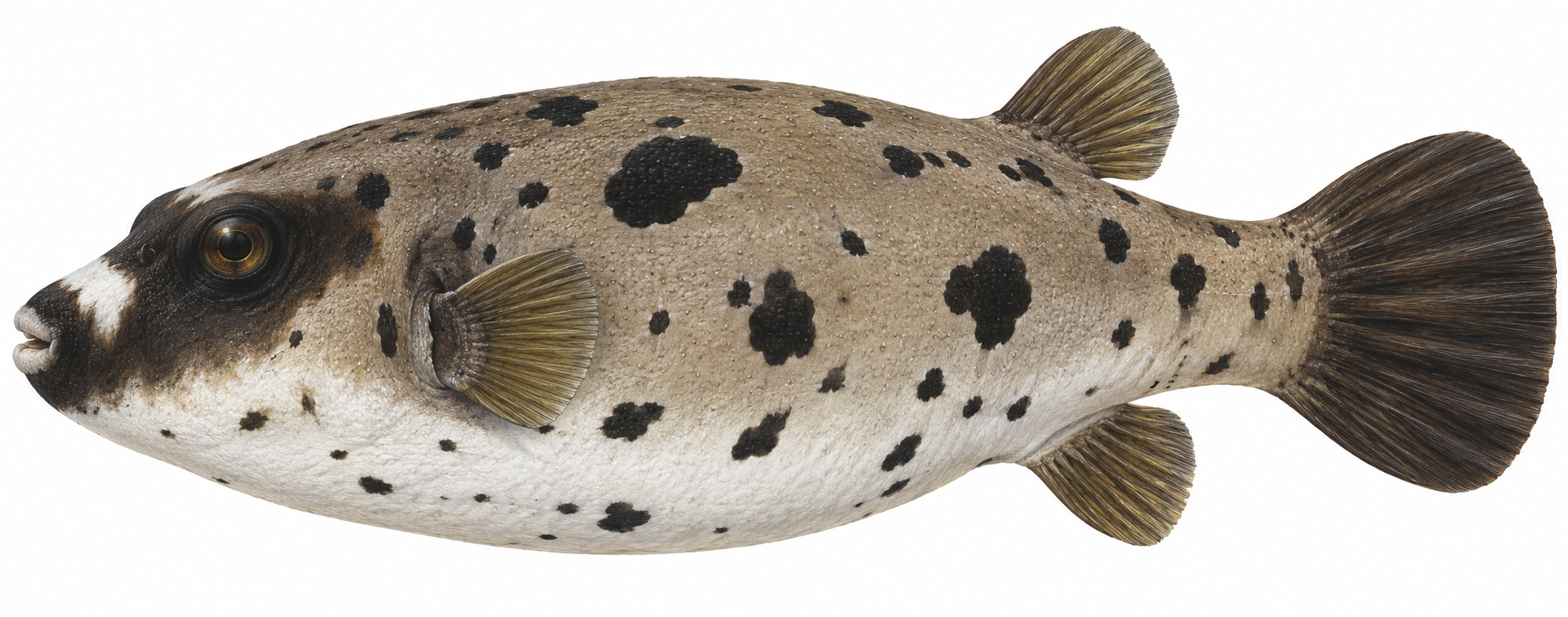
Blackspotted Puffer
Arothron nigropunctatus
Raja Ampat field guide
Two things to tell your dive buddy
- The scientific name translates the key clue: nigro refers to black and punctatus to spotting. The ground color, however, can vary dramatically.
- Its diet is broader than the doglike face suggests, including sponges, corals, molluscs, tunicates and algae.
How to identify it
Dark spots and patches around the eyes and snout; many have a pale bar across the snout. Some individuals are yellow.
Habitat and where to look
Coastal and outer reefs with abundant invertebrate growth.
Daily habits and behavior
Observe its natural foraging; never induce inflation.
What is on the menu?
Sponges, corals, molluscs, tunicates and algae.
Look-alikes and identification traps
Yellow individuals require care: use snout, eye patches and black spotting rather than ground color alone.
Try this observation
Record the spot pattern and face markings. Never harass a puffer into inflating.
Raja Ampat occurrence
Recorded in Raja Ampat; regional occurrence is not an itinerary-specific sighting promise. This guide does not imply that every site, itinerary or season offers the same chance of an encounter.
Observe, do not disturb
Keep a respectful distance, leave the animal an unobstructed route and follow your dive guide. Do not touch, feed, chase or collect wildlife. Identification does not establish permission to harvest or food safety; Florida harvest labels do not apply to this Indonesian guide.
Sources and review
Reviewed November 18, 2026.
Pick out separate dots on the face and body
Dark dots scattered across the head and body give the blackspotted puffer its name. Compare an uninterrupted patch of skin: the map puffer is better recognized by wandering lines and loops, not a plain scattering of dots.
SDI Reef Fish Identification offers a way to practice sorting closely related fish by their markings.
Make your next dive happen
Dive With UsTrain With UsExplore the Raja Ampat tripShop With Us
Questions? (772) 600-8288 or info@stuartscuba.com.




