


← Back to South Florida Fish ID
Blackcheek Tonguefish
Symphurus plagiusa · Cynoglossidae
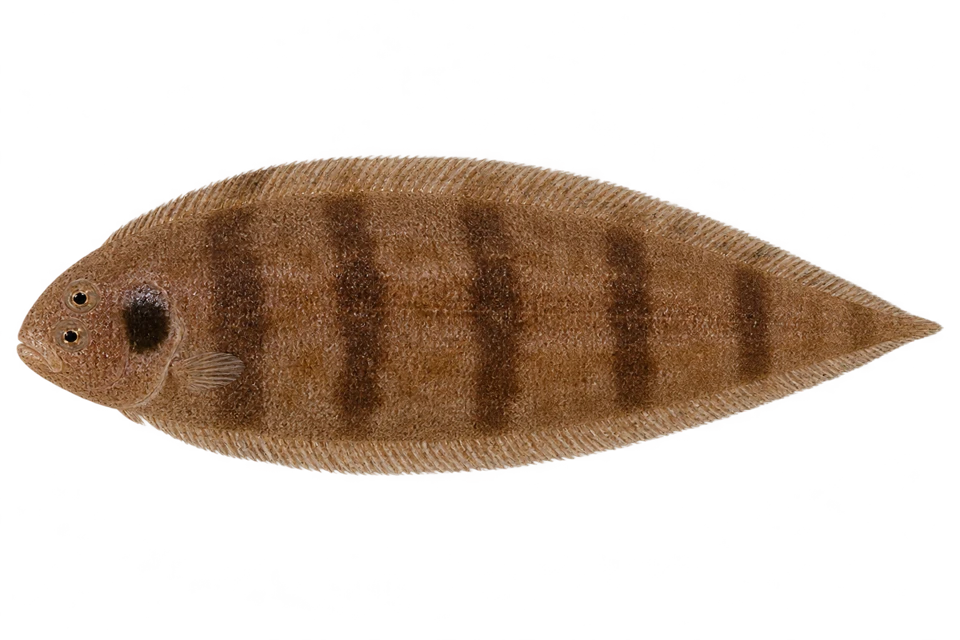
The black gill-cover spot stands out on a flatfish that narrows to a point.
One fun thing to know
There is no separate tail outline where the long fin fringes meet.
How to identify it
- Small close-set eyes on the left side; usually a bold dark spot high on the gill cover
- Brown body with several dark crossbars, often four or five
- Dorsal and anal fins merge into the pointed tail
Where to look
Muddy or sandy estuary bottoms. REEF survey records include occasional observations at Blue Heron Bridge.
Size
9.1 in (23 cm). reported maximum; measurement convention not specified.
What it eats
Bottom crustaceans, worms and small mollusks.
Behavior
Look for a moving edge on soft bottom; a well-camouflaged fish may be hard to separate from the substrate.
Reproduction
Eggs and larvae are pelagic.
Look-alikes
Other tonguefish are also tapering flatfish. Check the prominent dark spot and body bars; uncertain sightings need a clear overhead image.
Can you collect or eat it?
Enjoy watching it and leave it in the water. This guide does not verify species-specific harvest or food-safety rules. Check the current rules for the exact location, species and method before taking anything, and never collect where prohibited.
Check Florida’s current saltwater rules
Field references
I saw this and want to share
Make your next dive happen
Dive with Stuart Scuba · Train with us · Travel with us · Shop with us



