


Black Sea Cucumber
Holothuria atra · Holothuriidae · Sea cucumber · Galápagos Islands Fish ID
How to identify it
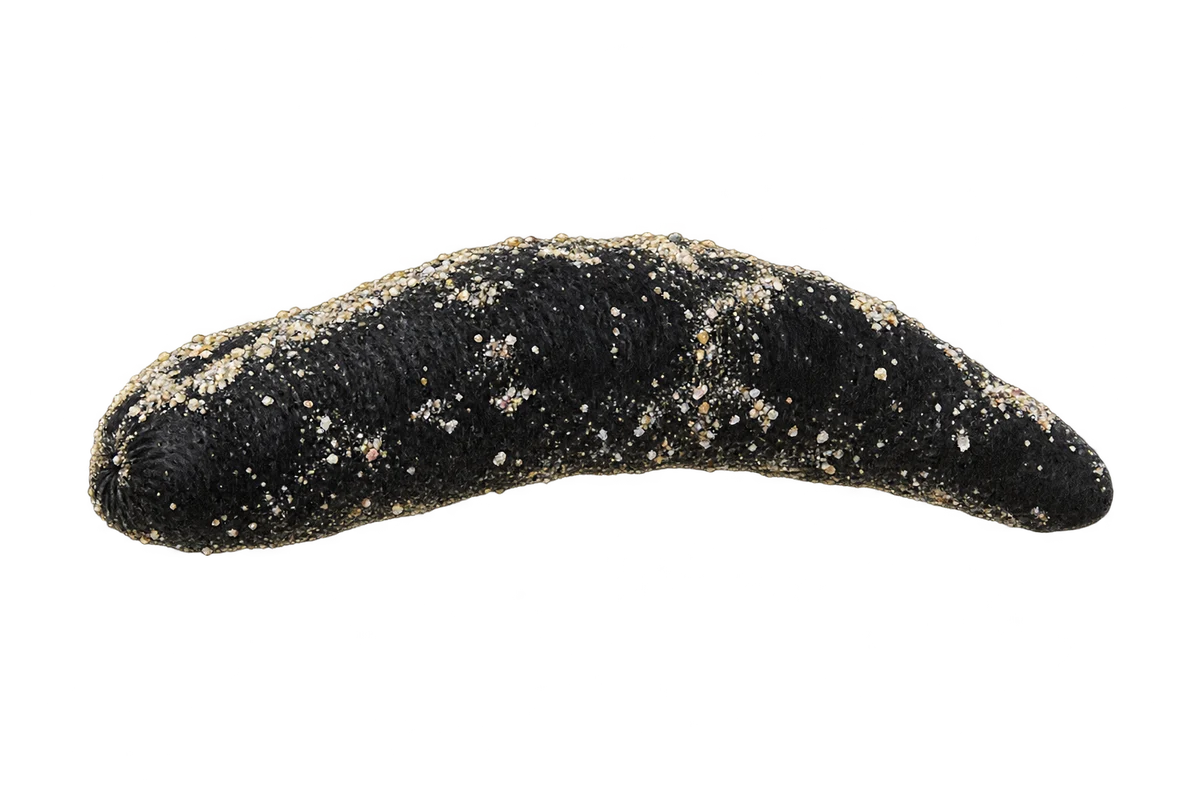
A black sea cucumber can look almost gray when a thin layer of sand sticks to its back. Look for smooth black patches showing through. The brown sea cucumber usually stands out by its much taller yellowish bumps.
Galápagos Islands records
Documented Galápagos record: Galápagos shallow benthic habitats. A record does not guarantee a sighting.
Fun facts
- The black color belongs to the skin beneath the sand.
- It has a long, relatively smooth body rather than a spiky silhouette.
- It feeds by taking up sediment and sorting organic matter from it.
- The mouth is on the underside at one end.
- Tiny oral tentacles help draw sediment toward that mouth.
- Some populations can reproduce by splitting, as well as sexually.
Explore and learn
A Palau field photograph shows this species on sand in a shallow lagoon. Its sandy coat is normal, not something to brush off to get a better look. Browse Palau Fish ID.
Get a side view of the shape and sand cover without brushing it off. Leave the animal where you found it.
Try a side angle that shows the sand coat and the darker skin underneath. A skill you can practice in the SDI Underwater Photographer course is framing those details while leaving the animal right where it is.




