


Bicolor Blenny
Ecsenius bicolor
Two details worth remembering
- A common name can hide several genuine color forms within one species.
- Algal turf is a miniature food web containing detritus; a bite at algae does not prove a strictly plant-only diet.
How to identify it
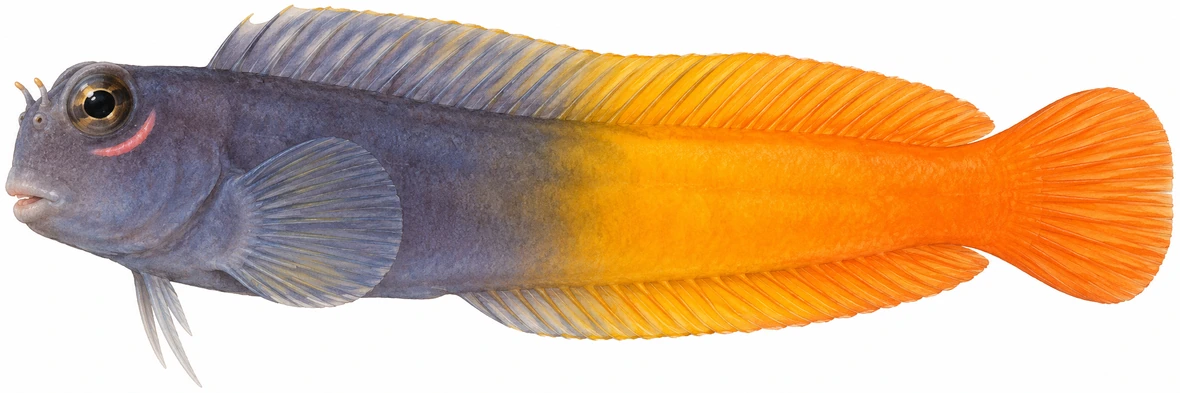
The familiar form has a blue-gray front and orange-yellow rear, but striped and mostly dark forms also occur. A curved pink-orange marking behind the lower eye is useful across this variation.
Where to look
Clear lagoons and seaward reefs with coral and algae-covered rock; often perched on coral heads or sheltered in empty worm tubes.
Natural history
Makes short excursions from a small refuge. Watch the head and entrance rather than trying to make the entire fish emerge.
Mostly organic particles combed from algal turf, not simply large strands of algae.
Adhesive eggs attach to a surface; larvae enter the plankton.
Look-alikes
Ecsenius springeri resembles a striped form but differs in its side stripes, rear orange area and weak or absent diagonal mark behind the eye.
What to watch for underwater
Can you find the curved mark behind the eye before deciding which color form you have seen?
Recorded in Raja Ampat
This species has a published Raja Ampat record. A regional record does not guarantee a sighting on a particular dive.
Sources: birdsheadseascape.com species reference · fishesofaustralia.net.au species reference · Regional survey record
I saw this and want to share
Back to Raja Ampat Fish ID · Dive Raja Ampat with Stuart Scuba




