


← Back to South Florida Fish ID
Bartail Goby
Coryphopterus thrix · Gobiidae
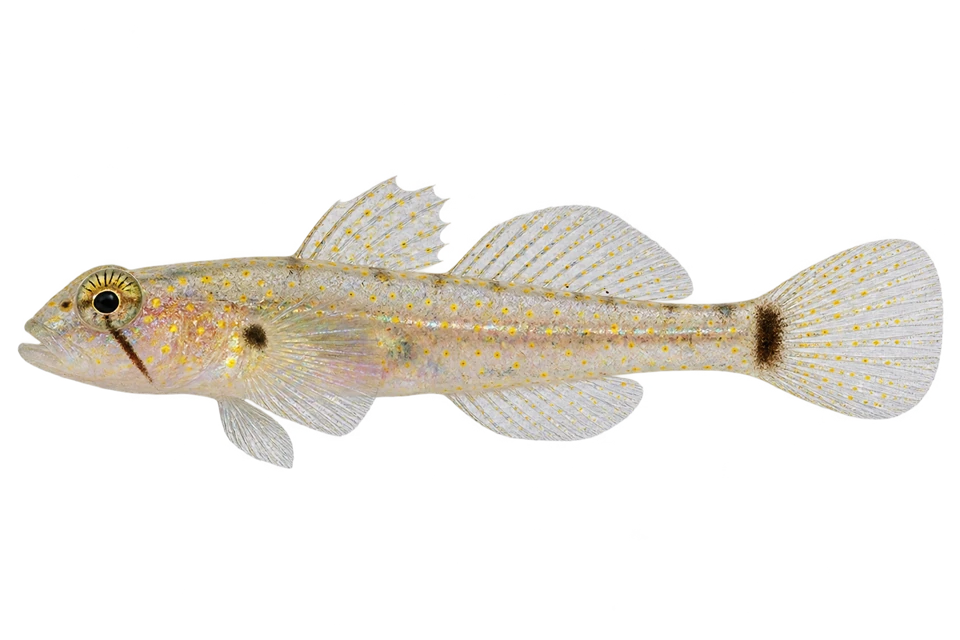
Look down for the little rectangle at the base of this sand goby’s tail.
One fun thing to know
Its pelvic fins join to make a small disk.
How to identify it
- Sandy, partly translucent body with scattered yellow-orange dots
- Short rectangular mark in the middle of the tail base
- Usually a dark spot high on the pectoral base; dark rays in the upper eye
Where to look
Clear sand around coral heads. REEF survey records include occasional observations at Blue Heron Bridge.
Size
2.0 in (5 cm). reported maximum; measurement convention not specified.
What it eats
Bottom algae, detritus and small crustaceans.
Behavior
Look at the sand next to coral rather than scanning the upper water column.
Reproduction
Eggs develop on the bottom; larvae are pelagic.
Look-alikes
Bridled-type sand gobies may also have tail spots. On this fish check the rectangular bar and the dark upper pectoral-base mark together.
Can you collect or eat it?
Enjoy watching it and leave it in the water. This guide does not verify species-specific harvest or food-safety rules. Check the current rules for the exact location, species and method before taking anything, and never collect where prohibited.
Check Florida’s current saltwater rules
Field references
I saw this and want to share
Make your next dive happen
Dive with Stuart Scuba · Train with us · Travel with us · Shop with us



