


← Back to South Florida Fish ID
Banded Tulip
Cinctura hunteria · Fasciolariidae
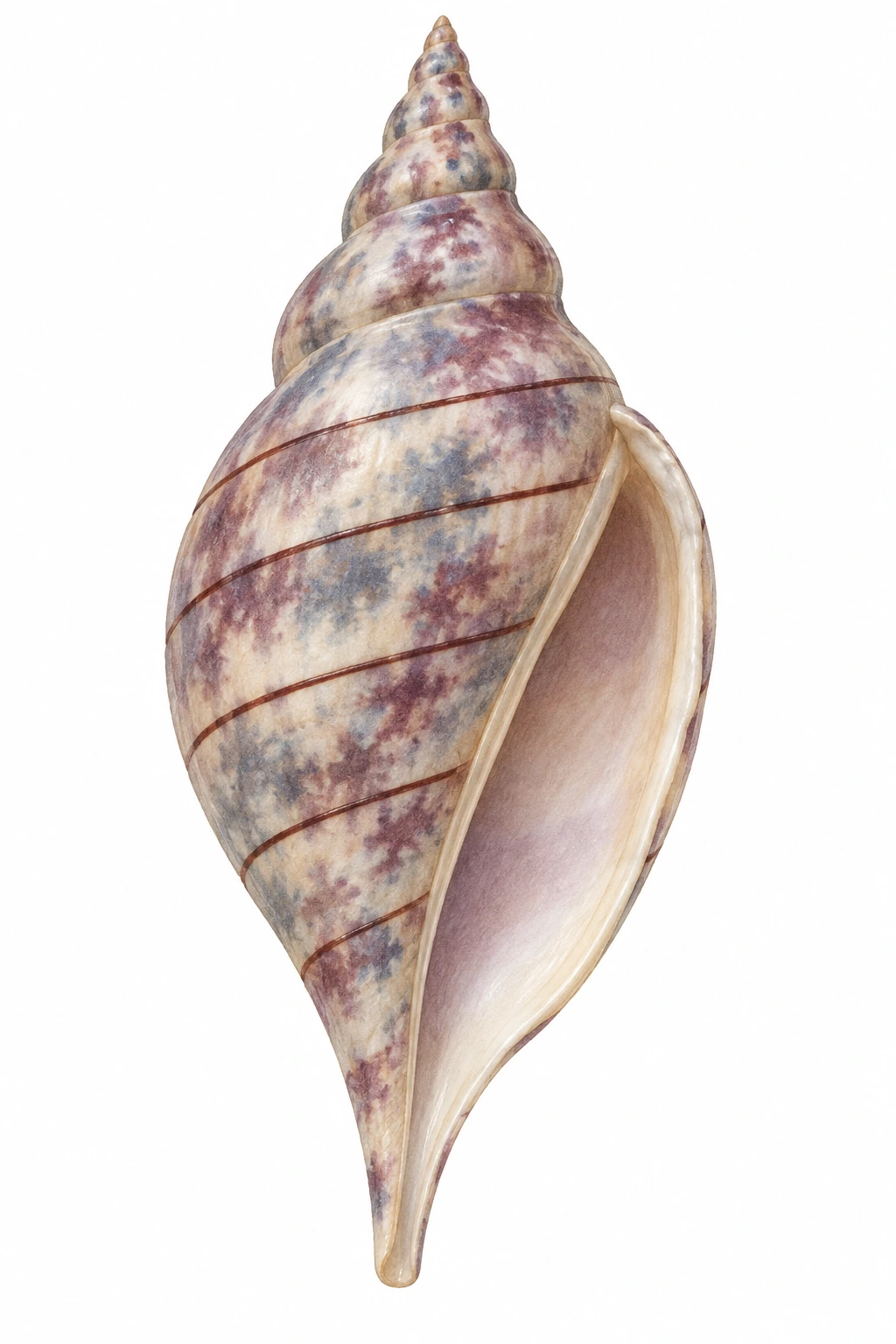
A handful of fine, dark spiral bands cross this spindle-shaped snail. The widely spaced lines are easier to count than its irregular patches of color.
One fun thing to know
Its egg capsules resemble the true tulip’s, but are smaller and lack the rim frills described for true tulip capsules.
I saw this and want to share
To share this guide with a dive buddy, copy the page link.
How to identify it
- Spindle-shaped shell with pointed spire and extended siphonal canal
- Often five or six narrow, widely spaced dark spiral lines
- Pale gray or brown ground color with irregular mottling
Where to look
A photographed shell record from Islandia supports occurrence in the Biscayne Bay area; the species is also documented elsewhere in Florida.
Size
To about 12 cm (4.7 in).
What it eats
Predatory; hunts other mollusks such as smaller snails and clams.
Behavior
Crawls or shelters on shallow mixed sand and seagrass bottoms.
Reproduction
Deposits clustered upright egg capsules on firm material; cases can persist after the young emerge.
Look-alikes
True tulip usually grows larger and has many more closely spaced dark spirals; band count and proportions together are better than color.
Can you collect or eat it?
Observation profile, not a harvest or edibility recommendation. Leave living animals and occupied shells in place; follow site rules.
Check current species and site rules before collecting. This guide does not establish permission to collect.
Make your next dive happen
Dive with Stuart Scuba · Train with us · Travel with us · Shop with us



