


← Back to South Florida Fish ID
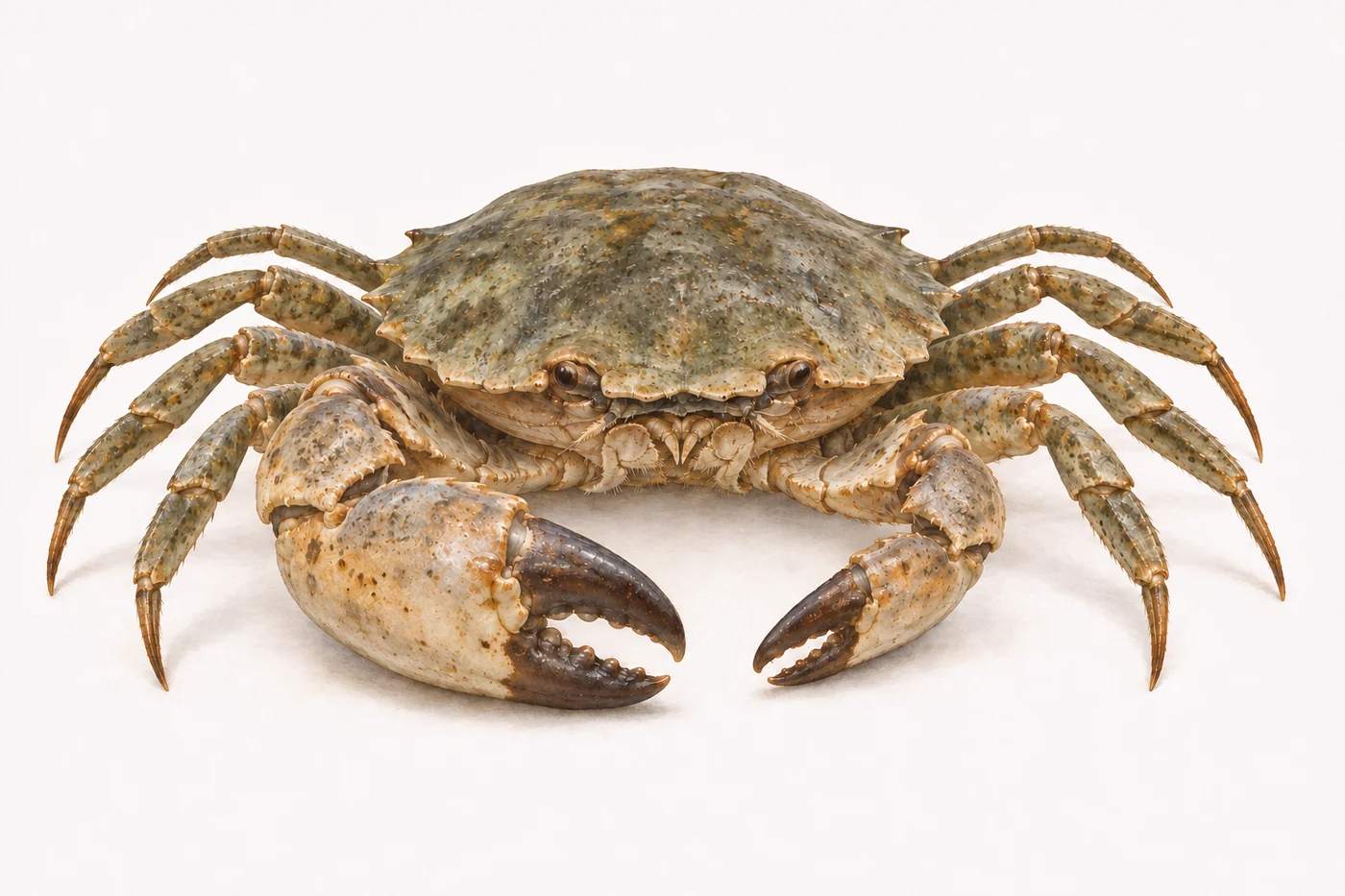
Atlantic Mud Crab
Panopeus herbstii · Panopeidae
A compact, strong-clawed crab associated with oyster beds and sheltered coastal bottoms.
One fun thing to know
Researchers described several free-swimming larval stages, even though adults often stay close to the bottom.
I saw this and want to share
To share this guide with a dive buddy, copy the page link.
How to identify it
- Broad, rounded carapace with teeth on its forward side margins
- Robust claw with a dark finger
- No flattened paddles at the end of the hind legs
Where to look
It has been recorded in Biscayne Bay, the Florida Keys and the Dry Tortugas.
Size
Larger than many oyster-bed mud crabs; use proportions and shell margins rather than size alone.
What it eats
A documented molluscan predator, including on oysters.
Behavior
Look in shell crevices around submerged oyster habitat rather than detaching oysters or turning cover.
Reproduction
Research has described its planktonic larval development. Local breeding dates are not specified here.
Look-alikes
The depressed mud crab is flatter and typically smaller, but similar mud crabs require a key. Claw color is not enough.
Can you collect or eat it?
CC: Observe and leave in place. Stuart Scuba conservation recommendation, not blanket legal protection.
Check current species and site rules before collecting. This guide does not establish permission to collect.
Make your next dive happen
Dive with Stuart Scuba · Train with us · Travel with us · Shop with us



