


← Back to South Florida Fish ID
Atlantic Moonfish
Selene setapinnis · Carangidae
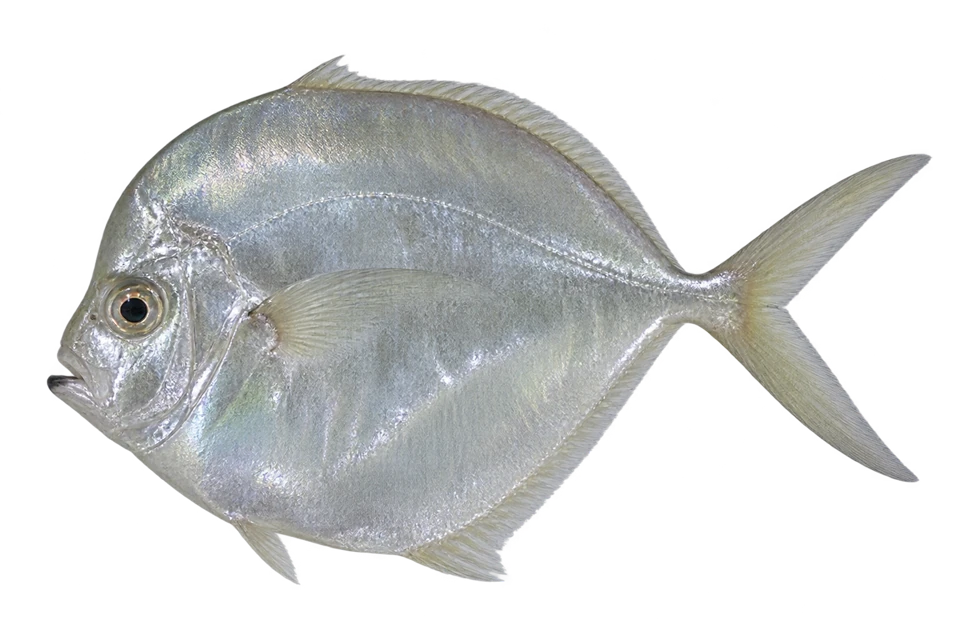
A side-on adult looks like a gleaming silver disc with a steep forehead.
One fun thing to know
The body is so compressed its little embedded scales can make it look scaleless.
How to identify it
- Very deep, thin silvery body; steep forehead above a blunt muzzle
- Black tip on lower jaw and narrow dark edge on top of tail wrist
- Strongly forked tail and low leading lobes on the adult soft dorsal and anal fins
Where to look
Continental shelf and sometimes brackish coastal water. REEF survey records include occasional observations at Blue Heron Bridge.
Size
18.3 in (46.5 cm). reported maximum; measurement convention not specified.
What it eats
Small fish, crustaceans, squid and plankton are reported.
Behavior
A head-on view can nearly disappear; wait for a turn to see the broad side.
Reproduction
Eggs and early larvae are pelagic.
Look-alikes
Lookdown initially seems similar. Compare head shape and the adult fin lobes; young moonfish can have long dorsal spines, so compare adults with adults.
Can you collect or eat it?
Enjoy watching it and leave it in the water. This guide does not verify species-specific harvest or food-safety rules. Check the current rules for the exact location, species and method before taking anything, and never collect where prohibited.
Check Florida’s current saltwater rules
Field references
I saw this and want to share
Make your next dive happen
Dive with Stuart Scuba · Train with us · Travel with us · Shop with us



