


← Back to South Florida Fish ID
Atlantic Cutlassfish
Trichiurus lepturus · Trichiuridae
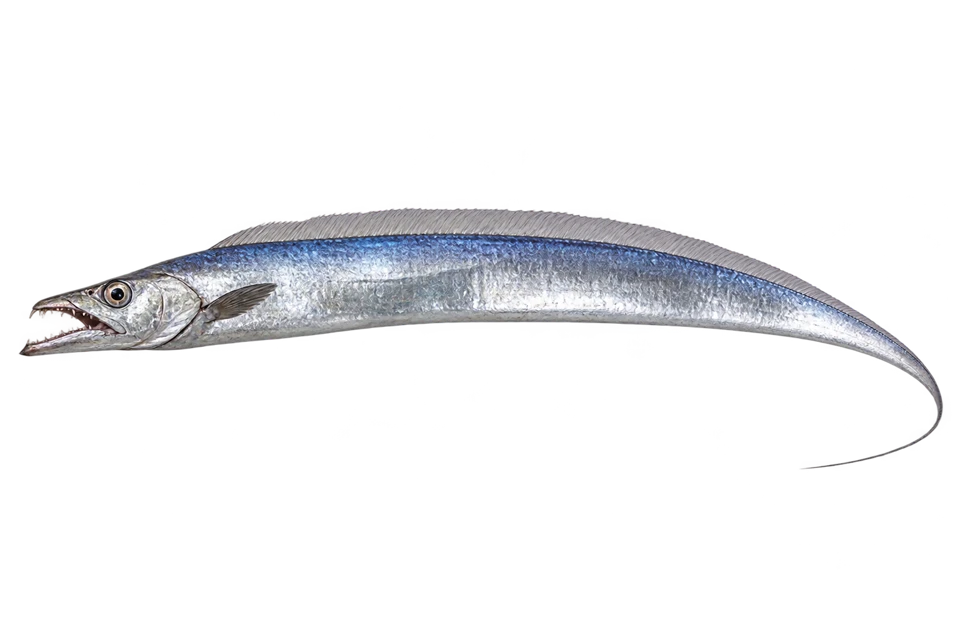
The shiny ribbon tapers into a whip, without a conventional tail fin.
One fun thing to know
The lack of a tail fin helps identify it even when the head is out of sight.
How to identify it
- Extremely long, thin, metallic silver body
- Large fang-bearing mouth, with lower jaw projecting
- Dorsal fin runs nearly the length of the body, which ends in a fine filament
Where to look
Continental shelf and slope, with juveniles also using shallow coastal and estuarine waters. REEF survey records include occasional observations at Blue Heron Bridge.
Size
92.1 in (234 cm). reported maximum; measurement convention not specified.
What it eats
Fish, squid and other free-swimming prey including crustaceans.
Behavior
Look for a flashing silver edge as the body turns, rather than a round eel silhouette.
Reproduction
Eggs and early larvae are pelagic.
Look-alikes
Eels are long but rounder; a cutlassfish has a blade-flat body and a pointed, finless tail.
Can you collect or eat it?
Enjoy watching it and leave it in the water. This guide does not verify species-specific harvest or food-safety rules. Check the current rules for the exact location, species and method before taking anything, and never collect where prohibited.
Check Florida’s current saltwater rules
Field references
I saw this and want to share
Make your next dive happen
Dive with Stuart Scuba · Train with us · Travel with us · Shop with us



