


Areolate Grouper
Epinephelus areolatus
Two details worth remembering
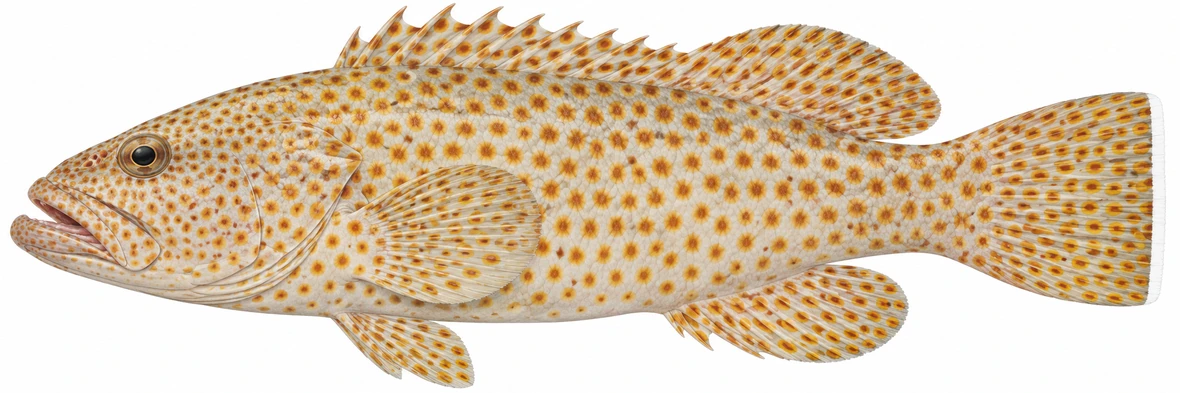
- Its spotted coat changes scale as it grows: an adult can look much more finely speckled than a juvenile of the same species.
- The narrow white tail edge and lack of large dark blotches along the dorsal-fin base help separate it from some very similar spotted groupers.
How to identify it
A pale grouper with numerous round yellow-brown to orange spots and an almost square tail edged narrowly in white. The spots become relatively smaller and more numerous as the fish grows.
Where to look
Soft-bottom areas beside reefs. Search the reef-to-sand transition rather than assuming a grouper must be tucked into coral. Its full recorded depth range extends far beyond recreational diving.
Natural history
Fishes and bottom invertebrates, especially prawns and crabs.
Look-alikes
Frostback grouper Epinephelus bilobatus has dark blotches along the dorsal-fin base; this species lacks them.
What to watch for underwater
Log tail shape, tail-edge colour and the presence or absence of big blotches along the back before deciding.
Recorded in Raja Ampat
This species has a published Raja Ampat record. A regional record does not guarantee a sighting on a particular dive.
Sources: fishesofaustralia.net.au species reference · Regional survey record
I saw this and want to share
Back to Raja Ampat Fish ID · Dive Raja Ampat with Stuart Scuba




