


Antillean Fileclam
Limaria pellucida · Limidae · Shelled bivalve · Cayman Islands Fish ID
How to identify it
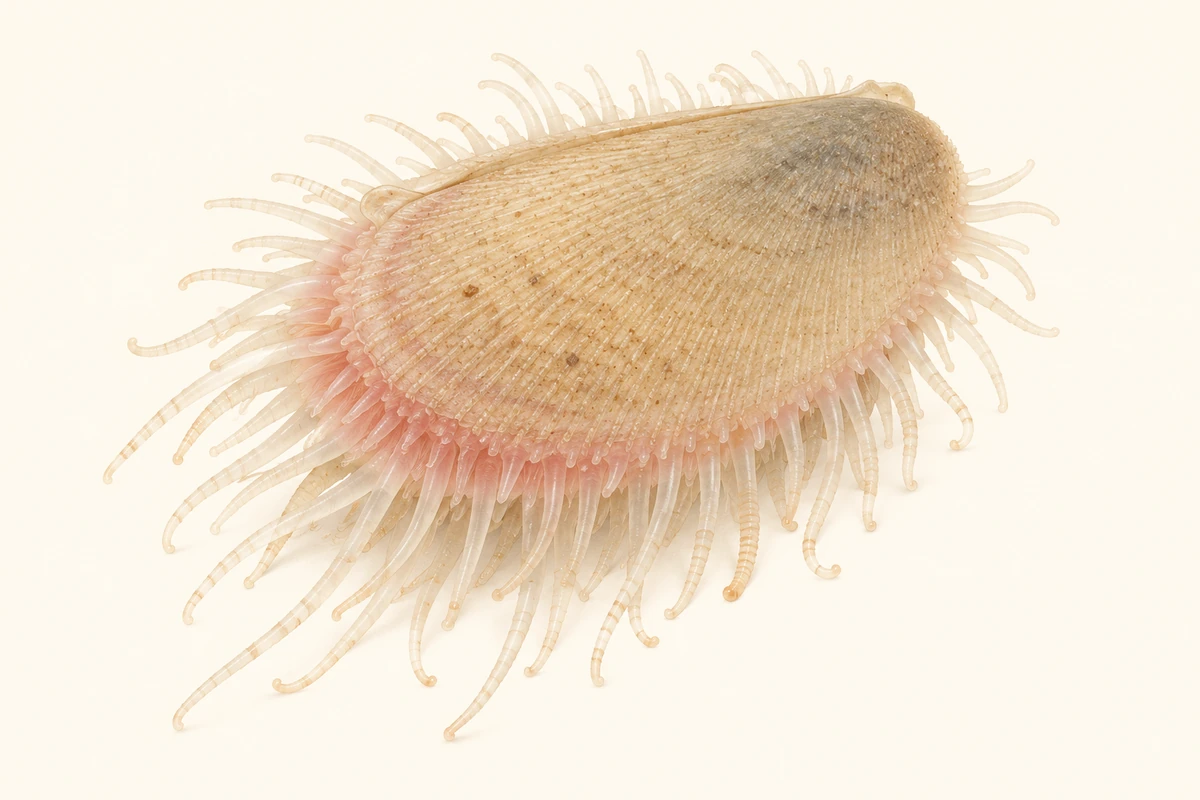
Peek into a gap without moving anything: a pale, slanted little shell and its fringe of soft tentacles are more useful clues than the shape alone. This is not the larger rough fileclam.
Rough fileclam usually has a rougher shell and strongly red tissues. Look for the Antillean fileclam’s thin whitish shell, close-set narrow ribs and pale translucent tentacles in combination.
Cayman Islands records
Soto’s Reef, Grand Cayman; documented as living transect fauna in the 2015 marine environmental baseline.
A documented record does not guarantee an encounter on your dive.
Fun facts
- The shell is about thumbnail-sized, even when the surrounding fringe makes it look bigger.
- The little ribs run out from the hinge rather than around the shell like rings on a tree.
- The two small ‘ears’ at the hinge are similar in size.
- Its living fringe may look peach or almost clear. A good close-up can show pale rings on individual tentacles.
- The scientific specimen behind the original name is still cataloged at Harvard’s Museum of Comparative Zoology.
- The Grand Cayman survey counted living animals, not just washed-up empty shells.
See more on your next dive
A close shot taken from outside the opening can show both shell and mantle fringe. Don’t turn over rocks to find it.
Underwater Photography · Explore Stuart Scuba group dive trips




