


← Back to South Florida Fish ID
Alphabet Cone
Conus spurius · Conidae
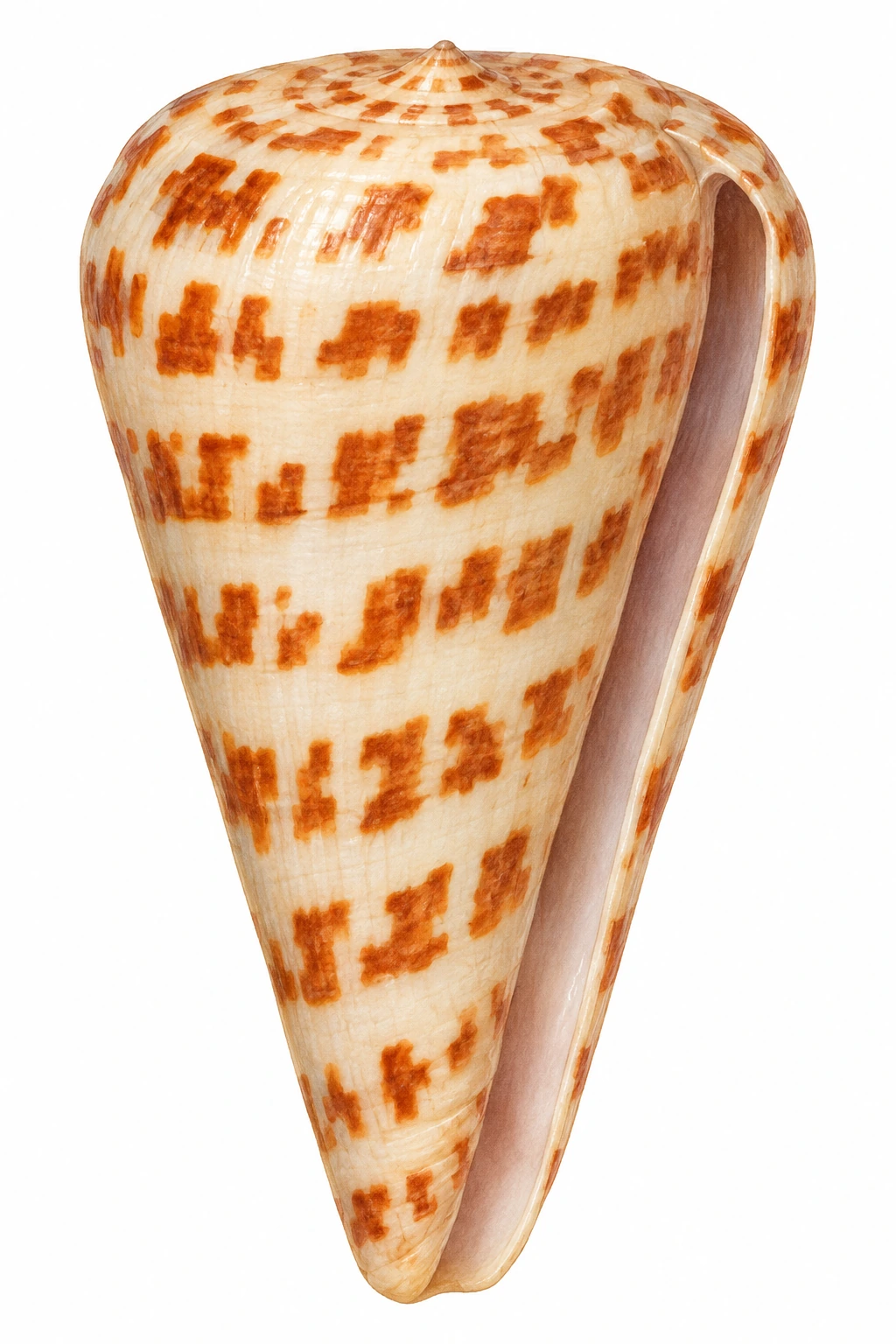
A pale cone with rows of orange to tan symbols is often an alphabet cone. Use a camera: a living cone snail is not safe to handle.
One fun thing to know
Its young hatch as free-swimming larvae called veligers and don’t look like the adult cone at first.
I saw this and want to share
To share this guide with a dive buddy, copy the page link.
How to identify it
- Cream with irregular rectangular orange-brown marks
- Broad shoulder tapering evenly toward the narrow base
- Relatively low spire and a long narrow aperture
Where to look
Florida records include Key Largo and Broward County. A shell find does not establish an active local population.
Size
Several centimeters long; color and shape are more useful than length alone.
What it eats
A venomous predator of small prey; the profile does not identify prey from the shell appearance.
Behavior
Can be partly hidden in sand and nearby cover. An apparently empty shell can still contain a snail or another occupant.
Reproduction
Documented young hatch as swimming veligers.
Look-alikes
Florida cone usually has a taller spire and broader chestnut spiral bands rather than rows of letterlike blocks.
Can you collect or eat it?
Venomous cone snail. Do not handle a live animal or put a shell of uncertain occupancy in a pocket. Photograph it in place; this is not a harvest recommendation.
Check current species and site rules before collecting. This guide does not establish permission to collect.
Make your next dive happen
Dive with Stuart Scuba · Train with us · Travel with us · Shop with us



