


Orange Tube Sponge
Agelas tubulata · Agelasidae · Sponge · Cayman Islands Fish ID
How to identify it
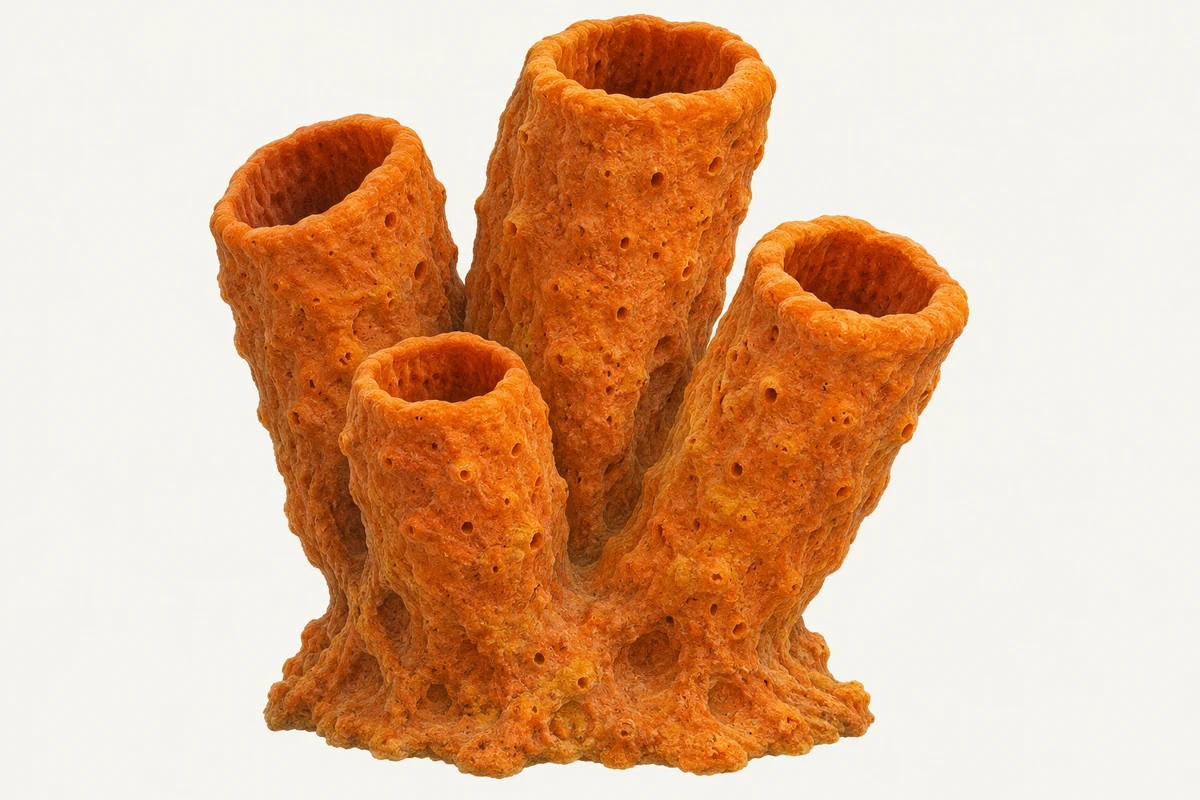
Look for chunky upright tubes that share a base. The open ends are as informative as the outer color: each tube ends in a conspicuous opening.
Similar orange and brown species also make tubes. Compare the wall proportions, surface and whole cluster, but don’t label a specimen to species from an orange tube alone.
Cayman Islands records
A Grand Cayman field study directly examined this sponge along a shallow-to-deep reef gradient. That is a documented record, not a reason to go beyond your dive plan.
A documented record does not guarantee an encounter on your dive.
Fun facts
- The big outlet at the top is called an osculum.
- A local study tracked growth of the sponge itself as well as changes around its openings.
- Researchers studied both shallow and deeper colonies off Grand Cayman.
- The tubes circulate water through internal chambers that capture tiny suspended food.
- Some food comes from particles too small to see while diving.
- The researchers distinguished Grand Cayman specimens from the similar Agelas conifera used at other locations.
See more on your next dive
Photograph the colony from the side and from slightly above so the base and openings are both visible.
Get closer without touching the reef in SDI Underwater Photography · Explore Stuart Scuba group dive trips




