


Staghorn Coral
Acropora cervicornis · Acroporidae · Stony coral · Cayman Islands Fish ID
How to identify it
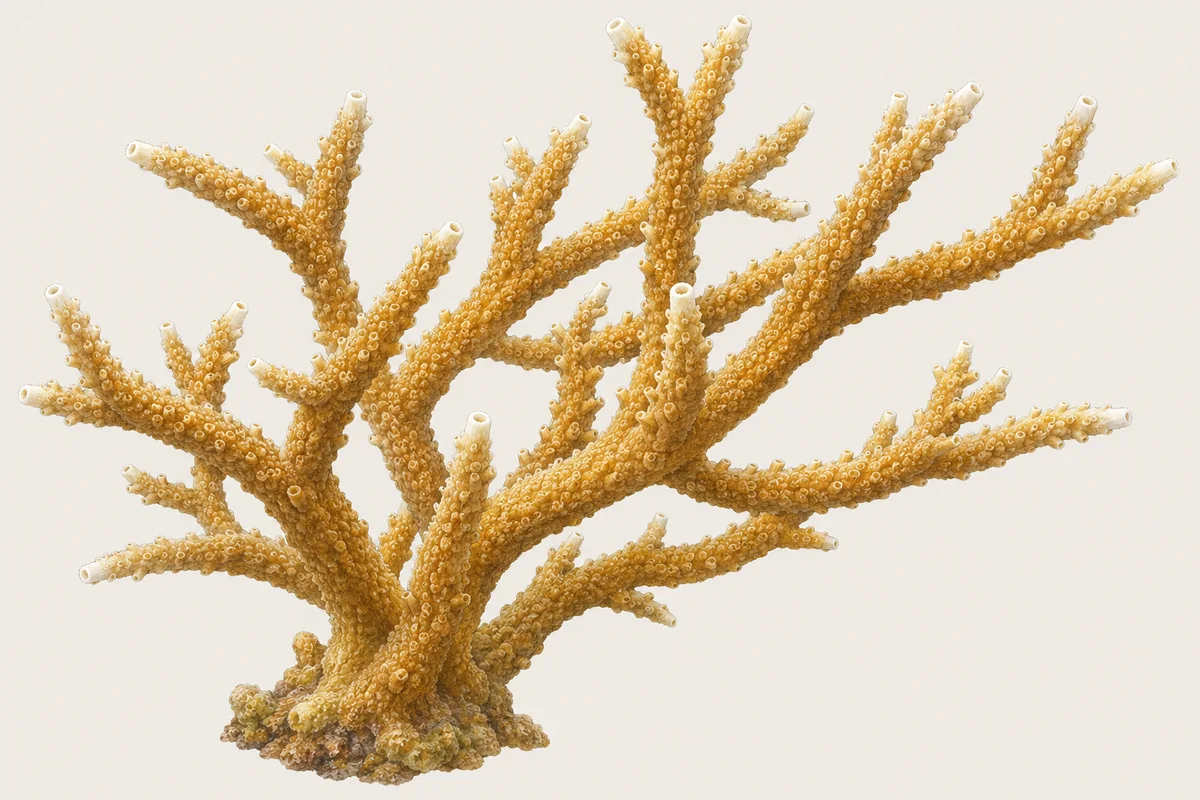
Staghorn coral grows an open tangle of round, antlerlike branches. Each growing branch ends in a prominent cup, often pale at the tip. It lacks the flat paddles that make elkhorn coral easy to spot.
Elkhorn coral has broad flat paddles; fused staghorn hybrid may form shorter joined branches and is not securely identified by shape alone.
Learn to observe reefs without touching
SDI Coral Conservation is the place to start if you want to learn about coral habitats and how to observe them responsibly.
Start with the colony’s outline and the pattern of its coral cups. Look from a position where you can keep your fins and camera clear of the colony.
- Keep your fins and camera clear: Advanced Buoyancy Control focuses on trim, weighting and hovering.
- Build a broader skill set: Advanced Adventure introduces several specialties, including deep diving and navigation, with opportunities to refine buoyancy.
- For deeper recreational dives already in your plans: Deep Diver focuses on planning depth and managing breathing gas. It’s not needed to identify coral on a shallow dive.
- Record the details: Underwater Photography covers lighting and still-image composition. Underwater Video covers framing and steady footage. Use either without resting gear on the reef.
Cayman Islands records
Surveys recorded it on Cayman reefs. A Little Cayman nursery grows this coral, which is separate from a record of a living wild colony. Historical presence does not mean an encounter today.
Fun facts
- The ends of living branches contain a large central growth cup.
- The antlers are a colony of many polyps, not one animal shaped like a tree.
- Dense stands can shelter small reef fish among their branches.
- A broken fragment can sometimes reattach and grow, a trait used in restoration.
- Staghorn and elkhorn can naturally hybridize.
- Little Cayman researchers grow staghorn fragments and track their survival.
See more on your next dive
Photograph a whole branch and its tip from outside the colony so your fins stay clear.




